

Australia's major cities have a paradox sitting in plain sight. Residential property is scarce and expensive, creating a housing shortage that affects the ability of hundreds of thousands of people to find affordable places to live. At the same time, commercial office buildings in CBD locations are partially empty, with vacancy rates in Sydney and Melbourne remaining elevated since hybrid work shifted the demand for office space permanently downward.
The obvious question follows naturally: could those empty offices become homes?
Office-to-residential conversion has been pursued in a number of international cities as a supply-side housing measure, most notably in parts of North America and the United Kingdom where post-pandemic office vacancy has been even more severe than in Australia. In this country, conversion has attracted growing policy interest as one potential contribution to housing supply. The reality is more complicated than the concept, but it is not as impractical as the development industry sometimes suggests.
Australia's major CBD office markets have not returned to pre-pandemic occupancy levels, and the evidence suggests they will not fully do so. Hybrid work has become structurally embedded in Australian working culture for a broad cohort of knowledge workers. Many businesses have responded by reducing their office footprint, giving up space they are no longer using consistently, or restructuring toward more flexible arrangements that require less dedicated square footage per employee.
The result is vacancy rates that have stabilised at elevated levels relative to the long-run pre-pandemic average. The vacancy is not evenly distributed across the office market. Newer, premium buildings with high energy efficiency, larger floor plates, better natural light, and contemporary fitout quality have held their occupancy far better than older, secondary-grade stock. It is the older buildings, those built before the 1980s or the early 1990s with smaller and less flexible floor plates, lower ceiling heights, and dated building services, that face the most difficult decisions about their long-term future.
Why Australia's housing shortage is about more than just building more homes sets the demand side of the equation. The shortage of housing in Australian cities is large enough that genuinely unconventional supply sources deserve serious evaluation, not reflexive dismissal.
Office-to-residential conversion works best when certain physical characteristics of the building align with residential requirements, and the gap between commercial and residential building standards can be bridged without prohibitive cost.
Building depth is the most important constraint. Efficient modern commercial floors are often 15 to 20 metres deep from the core to the perimeter, maximising the lettable area relative to the building's footprint. Residential apartments need natural light and ventilation in all habitable rooms. On a very deep floor plate, perimeter windows cannot serve interior spaces without mechanical ventilation and artificial lighting, which reduces amenity and increases operating costs. Narrower buildings with floor plates that allow light penetration across the full depth convert more naturally and economically.
Floor-to-ceiling height matters for residential amenity. Modern apartments with higher ceilings feel more generous and retain their appeal longer. Some older office buildings, particularly those built in the mid-twentieth century, have ceiling heights that are adequate for residential conversion. Newer office stock built to more efficient specifications may be more constrained.
Services infrastructure is one of the most costly conversion challenges. Commercial buildings run plumbing through a small number of vertical risers serving bathrooms and kitchens in fixed locations. Converting those systems to serve individual apartments with kitchens and bathrooms distributed across each floor requires substantial structural and services work. Buildings where the existing services layout can be adapted more simply convert at lower cost.
Location is where conversion has a genuine and underappreciated advantage. CBD office buildings are typically in the most accessible locations in their city, close to public transport, walkable to employment and retail, and connected to existing urban infrastructure. Delivering new residential apartments in these locations through conversion can add supply exactly where demand is strongest without requiring new infrastructure investment.
The barriers to conversion have slowed uptake in Australia relative to some comparable markets, and they are real rather than simply perceived.
Cost is the most significant barrier. Structural modifications, services replacement, fire safety upgrades to residential code, the creation of individual apartment entries from open-plan floors, and the amenity improvements needed to make converted apartments competitive with purpose-built residential product combine to make conversion comparable in cost to new construction in many cases. Without a meaningful cost advantage, the economic case relies entirely on the land cost already being embedded in the existing structure.
Planning presents a second barrier. Changing a building's use from commercial to residential requires planning approval in most Australian states, and some CBD zones actively restrict residential use or impose conditions that increase cost and uncertainty. The regulatory process adds time and cost that does not apply to developments in zones already designated for residential use.
Economic incentives work against conversion while commercial demand exists at all. A building owner with any prospect of commercial tenants returning, even at reduced rates or partial occupancy, is reluctant to commit to a permanent change of use. The decision to convert is effectively irreversible from a commercial asset perspective, and it is only made when commercial prospects are sufficiently poor to make the comparison with residential conversion value compelling.
Even pursued actively, office-to-residential conversion would make a modest contribution to Australian housing supply relative to the scale of what is needed. Could prefab and modular homes help solve Australia's housing crisis covers another supply-side innovation with a similar profile, promising in specific contexts and complementary to, rather than a substitute for, large-scale conventional residential construction.
The value of conversion is most clearly realised in specific CBD submarkets where office vacancy is high, building characteristics are suitable, planning flexibility exists, and residential demand for well-located apartments is strong. In those specific intersections, conversion can add supply quickly and in locations that purpose-built residential development would struggle to reach.
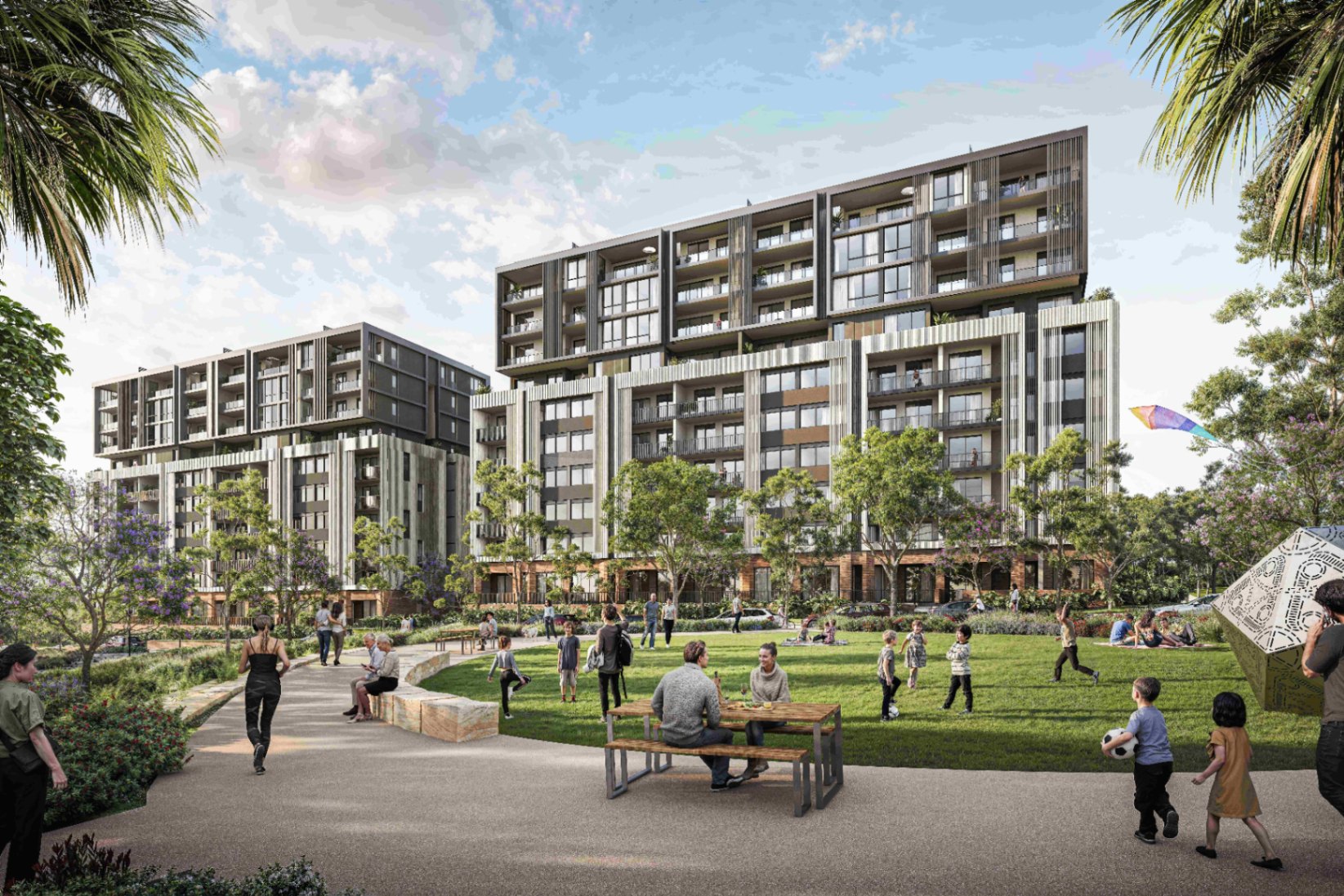 Coposit | Buy with $17K | Sydney Real Estate Market | Buy Property in NSW
Dawn | Few minutes to Melrose Town Centre | Buy with $10K | Secure with $17K and $317 x 58 weeks
For buyers, the office conversion question is primarily useful as context for understanding how inner-city apartment supply may evolve over the coming decade. Converted office buildings may add new residential stock in CBD locations at price points that differ from purpose-built new development, depending on how conversion costs compare to land and construction costs in those markets.
In the meantime, off-the-plan new residential development remains the primary route to new inner-city and near-city stock. Coposit allows eligible buyers to secure these with $10,000 upfront and weekly instalments during construction.
Browse current eligible developments on the Coposit projects page, download the Coposit app, or contact the Coposit team to explore what is available now.
Share this article



Follow Coposit:


© 2025 Copyright Coposit.

