

If you buy a $1.5 million off-the-plan property with a conventional 10% deposit, that could mean committing $150,000 at exchange, potentially years before the property is completed.
For many buyers, that is simply part of purchasing property. You pay the deposit and wait for settlement.
But what if you already have the money?
For investors and buyers with substantial savings, the question can be different. Rather than asking how can I afford the deposit?, it may be worth asking do I want to commit $150,000 upfront when settlement could still be two or three years away?
That turns the deposit into a question of liquidity and capital allocation, not just affordability.
 Coposit | Buy with $10K | Sydney Real Estate Market | Buy Property in NSW
Solis | Biggera Waters QLD | $10K deposit | Secure with $10k and $864 x 82 weeks
Opportunity cost is essentially what you give up when you choose one use for your money over another. If $150,000 is committed as a property deposit at exchange, that capital is no longer available for other purposes during construction.
Depending on the buyer, that money might otherwise remain in savings, investments, a business or simply be held as accessible cash.
There is no guarantee that keeping the money elsewhere will produce a better financial result. Investments can fall in value, interest rates change and different options carry different levels of risk.
The point is simpler. Capital committed to a property deposit cannot generally be used elsewhere while you wait for settlement.
For a buyer with significant liquid assets, that flexibility can have value of its own.
Off-the-plan construction can take several years. A lot can change during that period.
Investment opportunities can emerge. Markets can move. A business may need additional capital. Personal circumstances can change. Or a buyer may simply prefer to maintain a larger financial buffer until settlement approaches.
Paying a large deposit upfront reduces the amount of liquid capital available during that period.
That may be perfectly acceptable for one buyer and undesirable for another.
This is why the deposit decision can look different for an investor or high-net-worth buyer who already has the funds available. The question isn't necessarily whether they can pay $150,000 upfront.
It's whether they want to.
 Coposit | Buy with $10K | Sydney Real Estate Market | Buy Property in NSW
Concord Central | Concord West NSW | $10K deposit | Secure with $10k and $402 x 157 weeks
For eligible properties available through Coposit, buyers can secure the property with a smaller upfront amount and pay the remaining deposit through interest-free weekly instalments during construction.
Some participating properties can be secured from $10,000 upfront, although upfront amounts and weekly payment structures vary by property.
This changes the timing of the deposit rather than the purchase price.
Instead of committing the entire deposit at exchange, the buyer progressively contributes towards it during construction.
For someone who already has the full deposit available, that can mean retaining more of their capital for longer.
The money could remain invested, stay within a business, sit in savings or simply remain available as a liquidity buffer. How it is managed is entirely up to the buyer.
Not necessarily. This distinction matters.
Coposit's weekly deposit instalments are interest-free, but spreading the deposit does not automatically make the property cheaper or produce a better investment return.
The total property price and eventual finance requirements still need to be considered.
If retained capital is invested, its value can rise or fall. If it simply remains in a low-interest account, the financial benefit of retaining it may be relatively small.
The potential advantage is therefore not guaranteed investment performance.
It is capital flexibility.
For some buyers, having more control over when their capital leaves their hands may be valuable even when affordability was never the problem.
 Coposit | Buy with $10K | Gold Coast Real Estate Market | Buy Property in QLD
Harbour Shores | Biggera Waters QLD | $10K deposit | Secure with $10k and $2,765 x 17 weeks
Consider two buyers purchasing comparable $1.5 million off-the-plan properties. Both have enough savings to cover a conventional deposit.
One buyer chooses to commit the required lump-sum deposit at exchange.
The other purchases an eligible Coposit property, makes the required upfront payment and progressively builds the remainder of the deposit through weekly instalments during construction.
Both buyers are still purchasing property. Both still need to meet their contractual obligations and arrange the required finance at settlement.
The difference is when their capital is committed.
The first buyer commits substantially more capital at the beginning.
The second retains more liquidity initially while progressively contributing towards the deposit.
Neither approach is inherently better. They simply create different cash-flow and capital positions during the construction period.
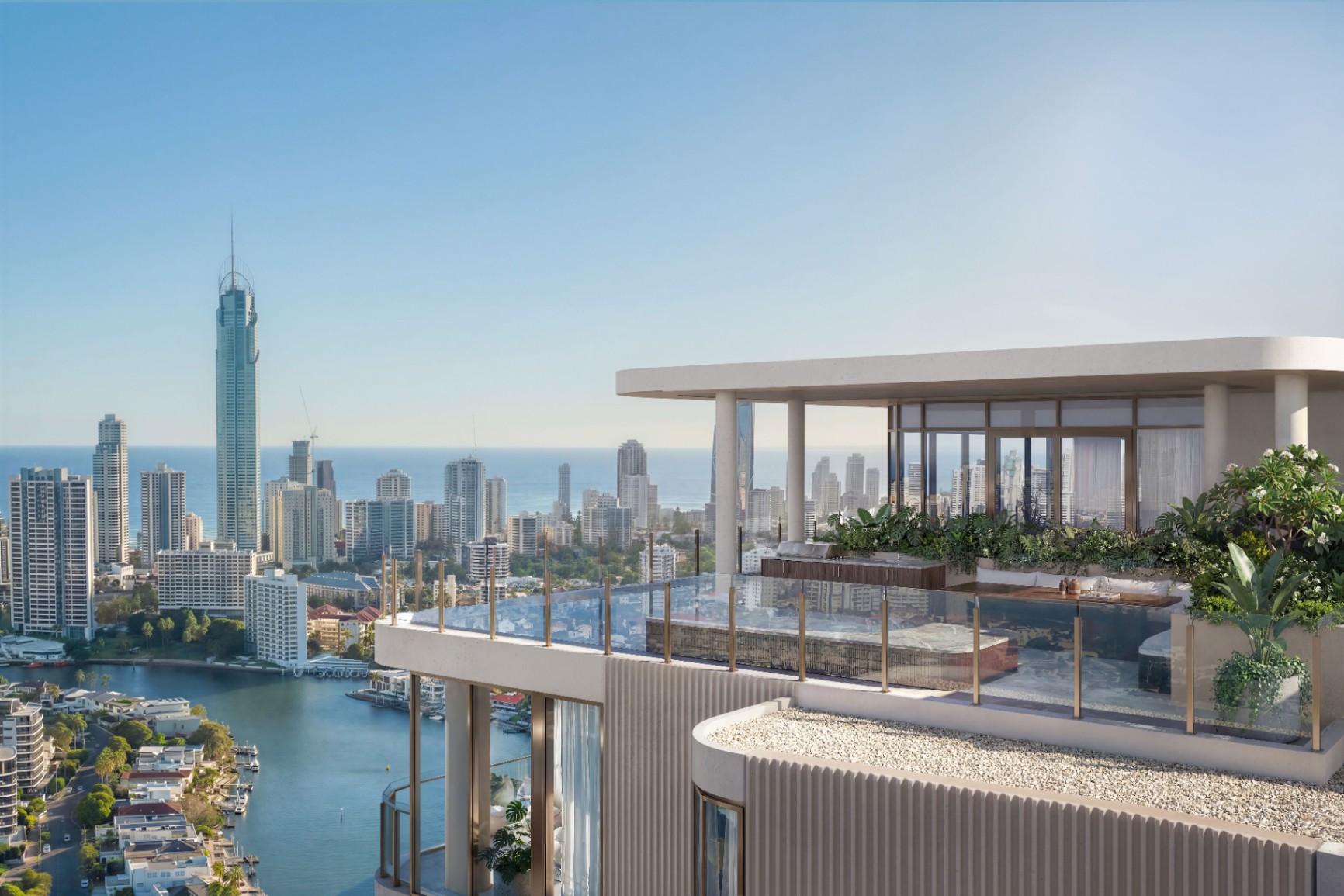 Coposit | Buy with $10K | Gold Coast Real Estate Market | Buy Property in QLD
Bronze on Chevron | Surfers Paradise QLD | $10K deposit | Secure with $10k and $1,173 x 122 weeks
This consideration may be particularly relevant to:
For these buyers, Coposit does not necessarily solve an affordability problem.
Instead, it can provide another way to structure when the deposit is paid.
Large property deposits are usually discussed as a hurdle buyers need to overcome. But that is only one side of the equation.
For buyers who already have substantial capital available, paying a large deposit years before settlement can also be viewed as a capital allocation decision.
How much do you want to commit today? How much liquidity do you want to retain during construction? And could progressively paying the deposit better suit the way you manage your money?
There isn't one answer that works for every buyer.
But if you have the capital available, the question may not be "Can I afford the deposit?"
It may be "When do I want to pay it?"
Browse participating properties on the Coposit projects page, download the Coposit app, or contact the Coposit team to learn how deposit instalments work for individual projects.
This article provides general information only and does not constitute financial, investment or property advice. Investment returns are not guaranteed, and eligibility, upfront payments and weekly payment amounts vary between properties. Always consider seeking independent financial advice before making property or investment decisions.
Share this article



Follow Coposit:


© 2025 Copyright Coposit.

