

Most Australians think about property investment in familiar terms. A house. An apartment. Maybe a townhouse. But a growing number of investors are looking at a different asset class entirely, one that doesn't have a kitchen or a bedroom but has quietly outperformed many traditional property types over the past decade.
Self-storage.
It's not a glamorous investment. But in the right market, it's a resilient one. And in Australia, it's becoming harder to ignore.
There are broadly two ways Australian investors access the self-storage market.
The first is buying or developing a standalone storage facility. This is a significant undertaking. Land costs, construction, planning approvals, and the operational demands of running a facility make this the domain of experienced commercial investors or syndicates.
The second, and more accessible, entry point is buying individual storage units within a purpose-built development. This is where Coposit's current listings become relevant. Projects like Stack Works Mascot in Sydney and Solus Industrial Byron Bay offer investors the ability to purchase individual industrial and storage units off-the-plan, with a flexible deposit structure that spreads the cost over time.
For investors who want exposure to the commercial property market without the complexity of acquiring and operating an entire facility, this model offers a meaningful alternative.
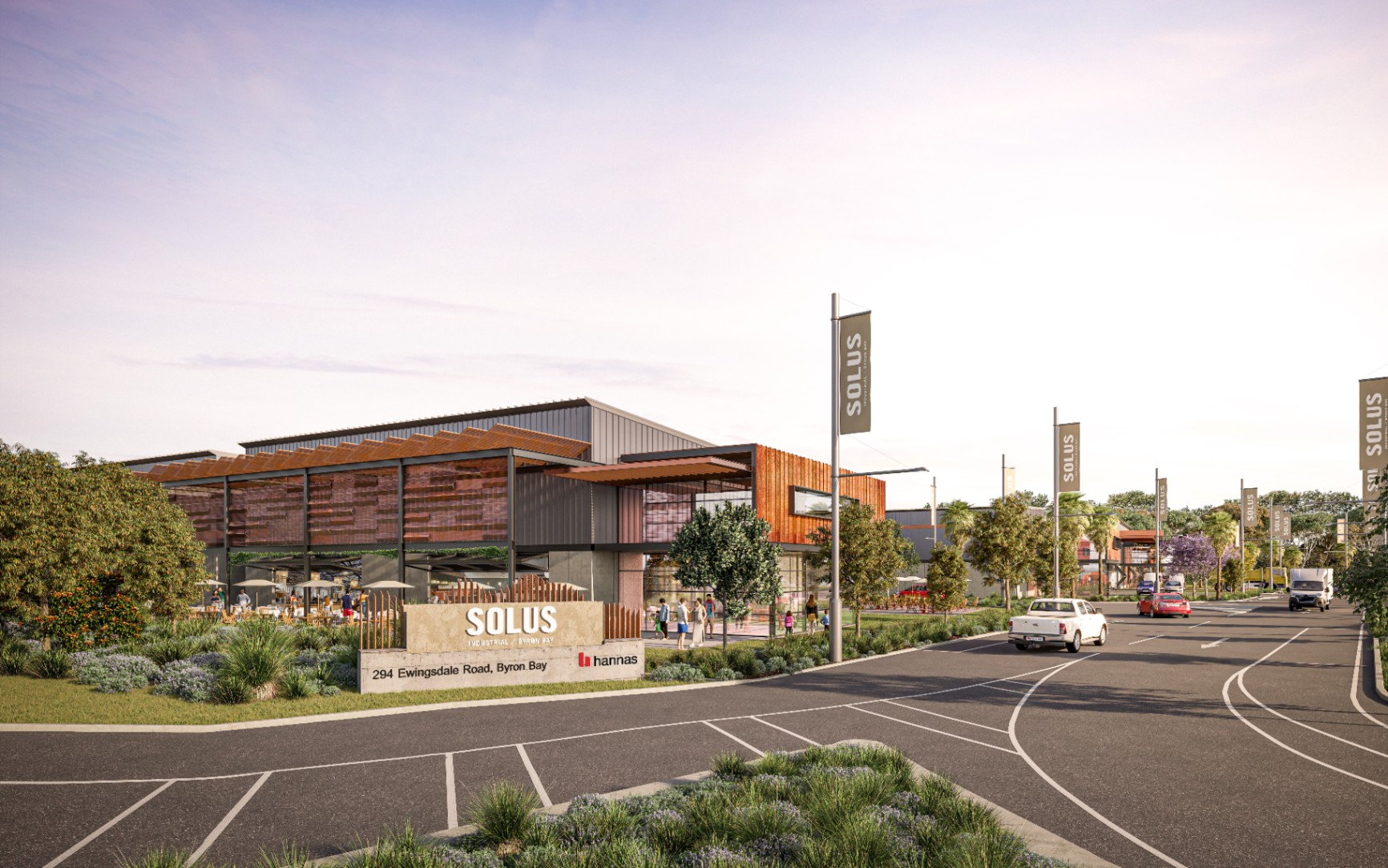 Coposit | Buy with $20K | Off the plan Industrial | Invest in Storage Units in Byron Bay NSW
Solus Industrial | Off the plan industrial | Secure with $20k and $24,063 x 13 weeks
Understanding what makes a storage investment work starts with one thing: demand. Not occupancy on paper, but genuine, underlying demand for that specific type of unit in that specific location.
This distinction matters more in storage than in most other asset classes.
A facility can show high overall occupancy while masking serious problems. Vacancy in self-storage is almost always concentrated in specific unit types. A facility might be 80% occupied overall, but if that remaining 20% vacancy is entirely in one unit size that was overbuilt for the market, the picture looks very different from the headline number.
Equally, occupancy without pricing power isn't the same as demand. A facility running at 100 per cent occupancy at below-market rates is a very different proposition to one running at 85 per cent at market rates. Revenue and net income, not occupancy, are what determine value.
The factors that create genuine storage demand in Australian markets include:
It's worth distinguishing between traditional self-storage facilities and the kind of industrial and storage units increasingly available through off-the-plan developments.
Industrial units in well-located urban and peri-urban precincts serve a different tenant base. They're typically larger than individual storage lockers, suited to small businesses, tradespeople, car enthusiasts, and light industrial users. Lease terms tend to be longer, tenants often more stable, and the underlying asset sits within a broader industrial property market that has seen strong performance in recent years driven by e-commerce growth and supply chain restructuring.
Stack Works Mascot, for example, sits within Sydney's inner south, a location with genuine functional demand from businesses needing accessible urban storage and workspace. That locational logic is very different from a suburban self-storage facility competing on price for residential customers.
 Coposit | Buy with $10K | Off the plan Industrial | Invest in Storage Units in NSW
Stack Works Mascot | Off the plan industrial | Secure with $10k and $285 x 73 weeks
Whether you're considering an individual storage unit purchase or a larger storage investment, a few things are worth working through carefully.
Location and local demand. Storage is hyperlocal. Two facilities a few kilometres apart can perform very differently based on the surrounding population, business activity, competition, and accessibility. Understand what's actually driving demand in the specific location, not just the broader suburb or city.
Unit type and size. Different unit sizes serve different customers. A development heavy in large units may struggle if local demand is primarily for smaller ones, or vice versa. Understanding the unit mix and how it matches the local market matters.
Existing and incoming supply. New supply entering a storage market can materially impact occupancy and rental rates. Before committing to a purchase, understand what else is being built or planned in the area.
Yield and income potential. Storage investment is fundamentally a yield play. The income the asset generates, relative to what you paid for it, is the primary return driver. Unlike residential property, capital growth expectations should generally be secondary to the income case.
Management. If you're buying into a development rather than operating a facility yourself, understand how the facility will be managed, what the fee structure looks like, and what track record the operator has.
Storage investment suits investors who want commercial property exposure with lower entry points than traditional office, retail, or large industrial assets. It suits investors who are comfortable with a yield-focused return profile rather than a capital growth story. And it suits investors who understand that the asset class rewards those who do their homework on local demand rather than relying on headline numbers.
It's not a set-and-forget investment. But for investors willing to approach it with the same rigour they'd bring to any other property decision, storage has earned its place in the conversation.
Explore current storage and industrial investment opportunities through Coposit.
Coposit helps buyers get into new developments sooner by spreading the deposit over time. To explore eligible properties or learn how it works, download our app or contact our team.
Share this article



Follow Coposit:


© 2025 Copyright Coposit.