

The assumption built into most deposit conversations is that spreading the deposit is something buyers do because they cannot afford to pay it all at once.
That assumption is wrong.
For buyers who have the full deposit available as a lump sum, there is a compelling case for choosing not to pay it that way, one rooted in capital efficiency, investment optionality, and liquidity management rather than affordability.
When a buyer pays a 10% deposit on a $2 million off the plan property, $200,000 leaves their liquid capital position at exchange. That money sits in trust for the construction period, typically 12 to 24 months, earning minimal returns and unavailable for any other purpose.
For a buyer with a $2 million deposit who is not capital-constrained, that $200,000 in trust for 24 months represents a real opportunity cost. The same capital deployed elsewhere, in a diversified portfolio, in a business, in another property at a different price point, or simply in a high-yield savings vehicle during a period of elevated interest rates, generates a return that the trust-held deposit does not.
The question is not whether the buyer can afford the deposit. It is whether deploying $200,000 as a lump sum deposit is the most efficient use of that capital during the construction period.
 Coposit | Buy with $10K | Gold Coast Real Estate Market | Buy Property in Surfers Paradise
Bronze on Chevron | Surfers Paradise QLD | $10K deposit | Secure with $10k and $1,173 x 122 weeks
Through Coposit, eligible off the plan properties can be secured with an upfront payment from $10,000 and the remaining deposit paid through weekly interest-free instalments during construction.
For a buyer who has the full deposit available, this is not an affordability tool. It is a capital allocation decision.
Instead of $200,000 leaving the capital position at exchange, the buyer commits $10,000 upfront and $X weekly during construction. The remaining $190,000 continues to work in whatever their existing capital strategy is, whether that is equities, other property, a business, or cash, during the 12 to 24 month construction period.
The weekly instalment is the cost of maintaining that capital flexibility. It is not interest charged on the deposit, Coposit's instalments are interest-free. It is simply the regular contribution to the deposit rather than a single front-loaded payment.
High-net-worth buyers typically place significant value on liquidity, the ability to deploy capital quickly when opportunities arise.
Tying up $200,000 in a trust account for 24 months eliminates liquidity for that capital. If an attractive investment opportunity emerges during the construction period, that $200,000 is unavailable. If circumstances change and the buyer wants to exit the purchase, recovering the lump sum deposit is not straightforward, it depends on contract terms, market conditions, and the developer's position.
Spreading the deposit through weekly instalments maintains liquidity over the construction period. The total capital committed grows gradually rather than being locked up entirely at exchange. Each week's instalment is a smaller, regular commitment rather than a large irreversible one.
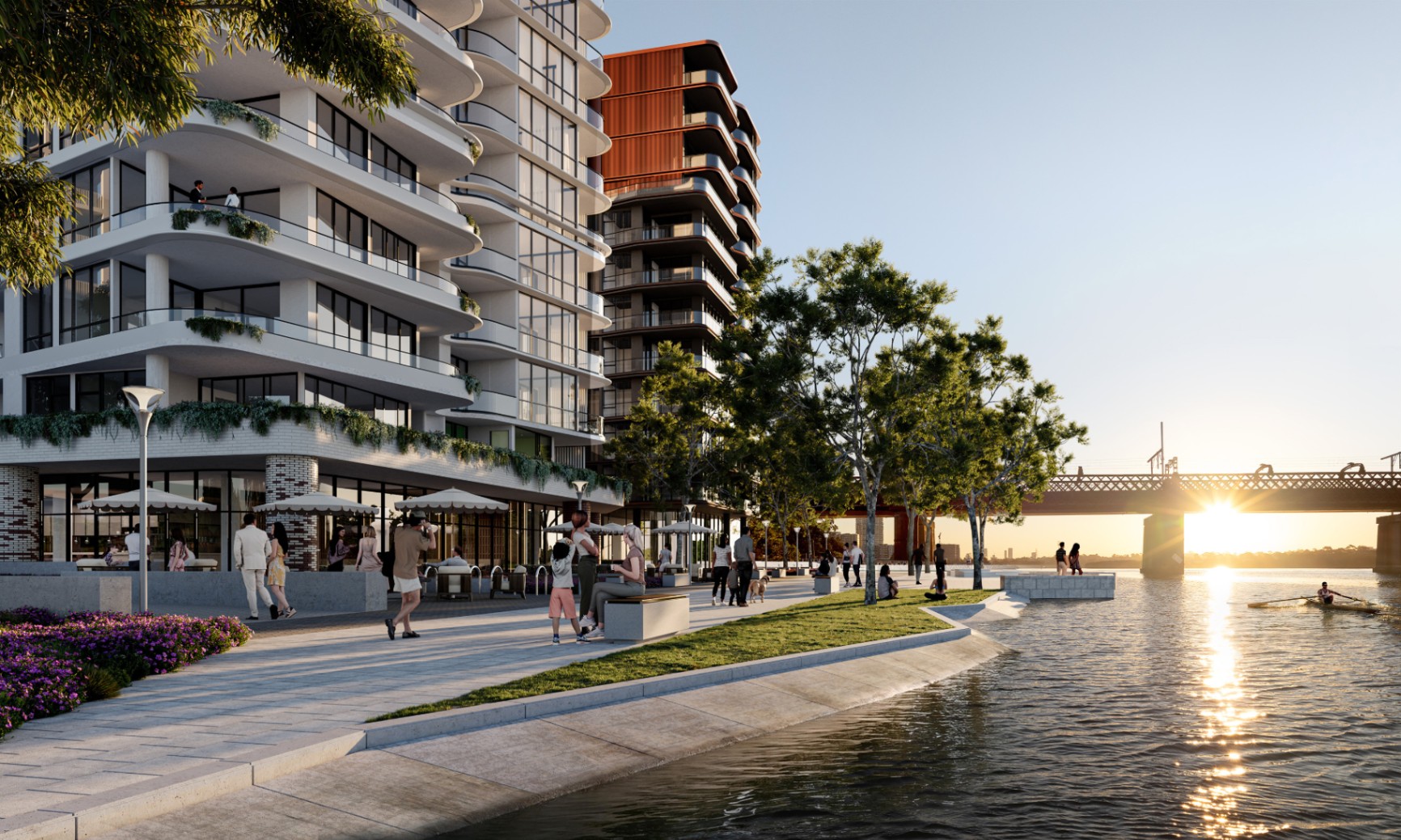 Coposit | Buy with $10K | Sydney Real Estate Market | Buy Property in NSW
Rhodes Bay | Rhodes NSW | $10K deposit | Secure with $10k and $859 x 39 weeks
For investors, there may be portfolio and tax considerations that make spreading the deposit preferable to paying it as a lump sum.
Capital held in income-generating investments during the construction period generates taxable income, but it also generates returns that would not exist if the capital were locked in a trust account. The net outcome depends on the specific investment, the tax position, and the return generated, but the optionality is real.
For buyers who are managing their capital across multiple properties, maintaining liquidity during a construction period allows them to continue deploying capital into other opportunities rather than concentrating it in a single pre-settlement trust account.
For buyers purchasing at higher price points, the Coposit structure also provides a different kind of optionality in the developer relationship. A buyer who has paid a $200,000 lump sum deposit has a larger capital at risk in the developer's trust account. A buyer who has spread the deposit through weekly instalments has a smaller cumulative exposure at any point during the construction period.
Both are held in Ammoze-managed trust accounts that are independent of the developer. But the concentrated risk profile is different.
 Coposit | Buy with $10K | Sydney Real Estate Market | Buy Property in NSW
Solis at Harbour Shores | Biggera Waters QLD | $10K deposit | Secure with $10k and $864 x 82 weeks
This is not a pitch for buyers to avoid paying their deposit. Settlement requires the full deposit and the home loan at the contracted date. The Coposit instalment structure builds that deposit progressively, it does not reduce it.
It is also not a suggestion that the Coposit model is inherently superior to a lump sum deposit for all buyers. For buyers who are not capital-constrained and have no better use for $200,000 during a construction period, paying the full deposit at exchange may be entirely appropriate.
The point is that the choice between paying a lump sum deposit and spreading it through instalments is a capital allocation decision, not purely an affordability one. For sophisticated buyers managing significant capital positions, that decision deserves the same analysis applied to any other capital allocation.
Browse current off the plan listings on the Coposit projects page, download the Coposit app, or contact the Coposit team to understand how the deposit instalment structure works for specific projects.
This article is general information only and does not constitute financial or investment advice. Always seek independent financial advice before making any property or investment decisions.
Share this article



Follow Coposit:


© 2025 Copyright Coposit.

