

Something is shifting in how Australians think about who they live with. The multigenerational household, long associated with migrant communities and older housing cultures, is becoming a mainstream consideration for a much broader range of Australian families. The reasons are practical, financial, and cultural, and they are converging in ways that are changing both how people buy property and how developers think about what to build.
The term covers a range of living arrangements. At one end, it describes grandparents, parents, and children sharing a single dwelling with common living spaces. At the other, it describes adult children living in a granny flat or secondary dwelling on the same property as their parents, with separate entrances and a high degree of day-to-day independence. In between sit arrangements involving dual-key apartments, dual occupancy homes, and properties with internal configurations that allow privacy within a shared structure.
What these arrangements share is a deliberate decision to organise housing around extended family proximity rather than the nuclear household model that dominated Australian suburban development for most of the twentieth century.
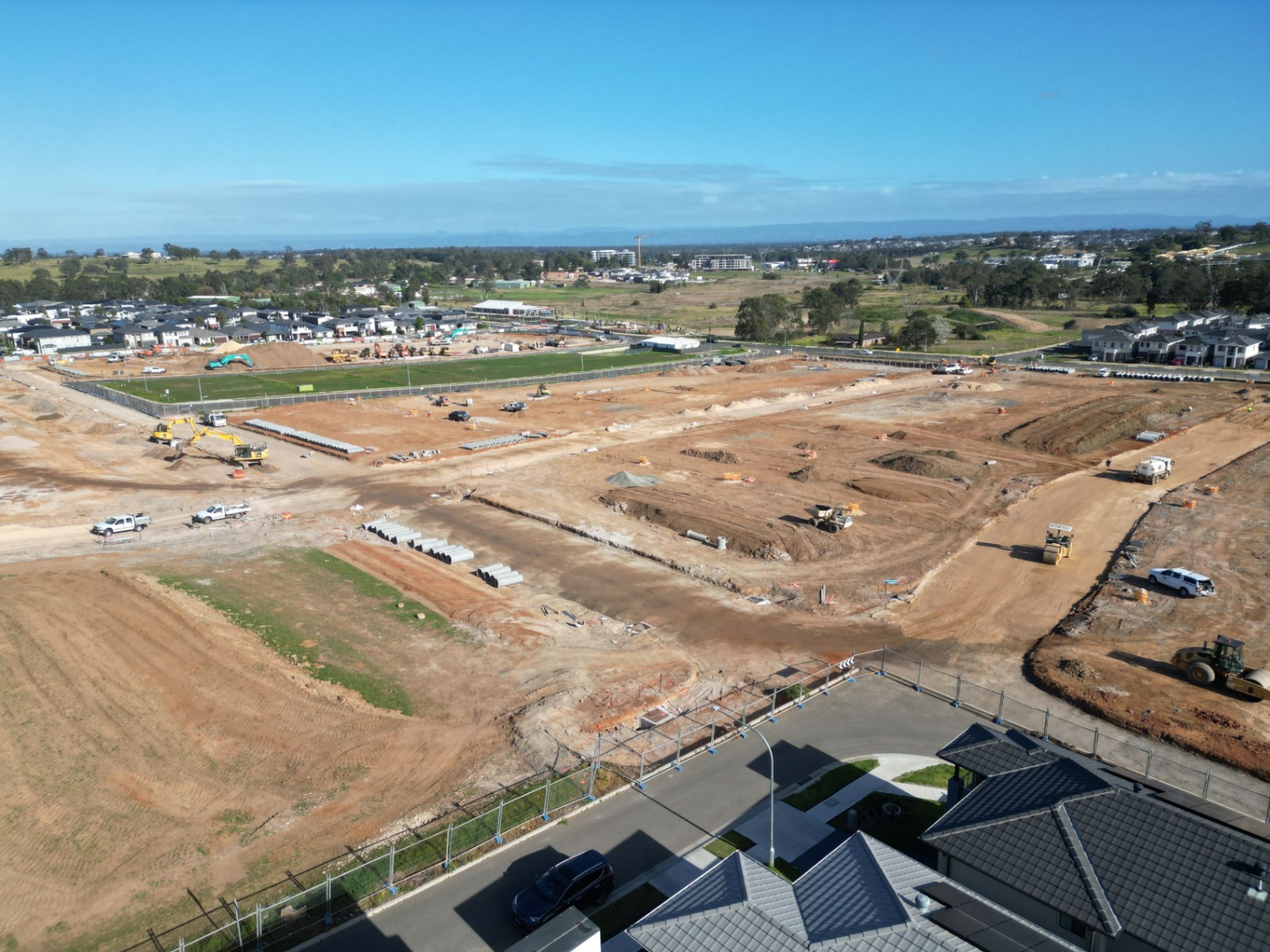 Coposit | Buy with $10K | Sydney Real Estate Market | Buy Property in NSW
Nelson Quarter | Box Hill NSW | $10K deposit | Secure with $10k and $1,037 x 26 weeks
The financial case for multigenerational living has strengthened considerably as housing costs have increased. For adult children who cannot independently afford to enter the property market in the suburb where they grew up or where their family is based, sharing a property with parents offers a pathway that the market alone does not. For older Australians who are asset-rich but find maintaining a large family home increasingly demanding, having adult children on the same property provides practical support and reduces the pressure to sell.
The childcare dimension is another driver. The cost of formal childcare in Australia is among the highest in the developed world. Families where grandparents can provide meaningful care within the same or an adjacent dwelling can reduce that cost substantially while maintaining a quality of care that parents value. As childcare costs have risen faster than wages, this calculation has become more compelling for more families.
Aged care considerations are increasingly part of the conversation too. Many Australians who have watched parents navigate the residential aged care system have concluded that they want a different outcome for their own parents, and potentially for themselves. Multigenerational living, where older family members remain connected to family life while retaining meaningful independence, is for many families a preferred alternative to institutional care, if the right property configuration can be found.
The Social Side of Housing: Can Where You Live Influence Your Wellbeing? touches on the connection between living arrangements and long-term health outcomes for older Australians.
For a significant proportion of Australia's population, multigenerational living is not a new response to contemporary pressures but a continuation of a deeply embedded cultural norm. In many South Asian, East Asian, Middle Eastern, Pacific Islander, and Southern European communities, the expectation that adult children remain close to parents, and that grandparents are integrated into family life rather than separated from it, has always shaped housing decisions.
As Australia's population has diversified, these expectations have become a more significant driver of housing demand. Buyers from these communities are often specifically seeking properties that can accommodate extended family configurations, and developers who recognise this are finding a market that standard product does not adequately serve.
The multigenerational trend is influencing what buyers look for and what developers build in ways that are becoming visible in the market.
Dual-key apartments, which provide two self-contained dwellings within a single title, have grown as a product category specifically because they serve multigenerational buyers who want proximity without full cohabitation. A parent and adult child can occupy the two dwellings independently while remaining on the same floor or in the same building.
Secondary dwellings and granny flats have become a more prominent part of house and land packages in outer suburban and regional markets. State governments have progressively relaxed the rules governing secondary dwelling construction, making it easier for buyers of standard lots to add a separate dwelling for family members.
New house designs have incorporated features specifically aimed at multigenerational buyers: ground floor master suites with accessible bathrooms for older residents, separate living areas with their own entrances, internal configurations that can be separated into distinct zones, and outdoor spaces designed to be shared without feeling intrusive.
How Smart Home Technology Is Changing Everyday Living is relevant here because technology infrastructure that supports aging in place, including remote monitoring, automated accessibility features, and communication systems, is increasingly part of how multigenerational homes are being designed and marketed.
 Coposit | Buy with $10K | Sydney Real Estate Market | Buy land in NSW
For buyers considering a multigenerational purchase, the financial analysis looks different from a standard single-household property transaction.
The purchase price of a property configured for multigenerational living is typically higher than a standard dwelling on the same site. But that cost is often shared across more than one household, meaning the per-household cost may be lower than each household could achieve by purchasing independently. A dual-key apartment purchased by a parent and adult child jointly may represent better value for each party than two separate purchases in the same building.
The rental income dimension also changes the picture. A buyer who purchases a property with a secondary dwelling and does not immediately need it for family members has the option of renting it out, offsetting holding costs while retaining the future option to use it for family purposes.
For buyers specifically looking for multigenerational capability, the key questions go beyond the number of bedrooms and bathrooms. Configuration matters more than size. Can different parts of the dwelling function independently? Are there separate entrances that would allow residents to come and go without passing through each other's living spaces? Is there sufficient storage and utility infrastructure to support two functioning households?
Council and strata rules are also relevant. Not all properties permit secondary dwelling construction, and not all strata schemes permit dual occupancy arrangements. Understanding the regulatory environment before committing is essential.
The multigenerational home is not a niche product for a specific demographic. It is an increasingly mainstream housing response to financial, demographic, and cultural realities that are shaping how a growing proportion of Australians want to live.
To explore developments that offer flexible configurations suitable for extended families, browse the Coposit projects page, download the Coposit app, or contact the Coposit team.
Share this article



Follow Coposit:


© 2025 Copyright Coposit.

