

Negative gearing is one of the most discussed and contested concepts in Australian property investment. It is frequently cited in debates about housing affordability, tax policy, and investment strategy, and yet many people who use the term regularly have an imprecise understanding of what it actually means, how it works in practice, and what it does and does not deliver for investors.
Getting clear on the mechanics is worth doing before forming a view on whether it is a strategy that suits your circumstances.
Gearing refers to using borrowed money to fund an investment. A positively geared property generates rental income that exceeds all the costs associated with holding it, including mortgage interest, management fees, insurance, rates, and maintenance. A negatively geared property generates rental income that is less than those costs, producing a net loss on the investment on a cash flow basis.
Negative gearing becomes a tax strategy because Australian tax law allows investors to deduct investment losses against other income. If your rental property produces a loss of $10,000 in a financial year, that loss reduces your taxable income by $10,000. At a marginal tax rate of 37 cents in the dollar, that reduces your tax bill by $3,700. At 45 cents in the dollar, the saving is $4,500.
The tax benefit does not eliminate the loss. It reduces its after-tax cost. An investor who loses $10,000 on a rental property and saves $3,700 in tax has still lost $6,300 in real terms that year. The investment case for negative gearing rests on the expectation that capital growth in the property's value will, over time, exceed the cumulative net losses and produce an overall positive return.
 Coposit | Buy with $10K | Brisbane Real Estate Market | Buy Property in QLD
Laya Residences | Taigum QLD | $10K deposit | Secure with $10k and $4,543 x 33 weeks
The range of expenses that can be deducted against rental income is broader than many investors initially expect.
Mortgage interest is the largest single deductible expense for most investors. The interest component of loan repayments is deductible; the principal repayment component is not. For investors on interest-only loans, the full repayment is deductible. For principal-and-interest loans, only the interest portion qualifies.
Property management fees, letting fees, advertising for tenants, insurance, council rates, water rates, body corporate fees, repairs and maintenance, and accounting fees related to the investment are all deductible. Land tax, where applicable, is deductible. The cost of travel to inspect an investment property was deductible until 2017, when this deduction was removed for residential investors.
Depreciation is a non-cash deduction that many investors underuse. How Depreciation Works for New Investment Properties covers it in detail.
Capital expenses, including the cost of improvements rather than repairs, are not immediately deductible. They are added to the property's cost base and affect the capital gains tax calculation at the time of sale. The distinction between a repair and an improvement is not always obvious and is an area where the ATO's guidance and an accountant's advice are both worth consulting.
Are Energy-Efficient Homes Worth Paying More For? is relevant here because energy efficiency upgrades may qualify as capital improvements rather than repairs, with implications for how they are treated for tax purposes.
The investment logic of negative gearing depends entirely on capital growth. An investor who holds a negatively geared property for ten years, absorbs cumulative net losses of $60,000 after tax offsets, and sells for a capital gain of $400,000 has made a substantial positive return. An investor who holds the same property for the same period with no capital growth has simply lost $60,000.
This means that the quality of the negative gearing strategy is entirely determined by the quality of the property selection. A property in a location with strong long-term demand and constrained supply has a reasonable basis for capital growth expectations. A property chosen primarily because it offers high negative gearing deductions, perhaps because it has very high costs relative to rents, is not necessarily a strong investment simply because the tax benefits are large.
The locations that have historically delivered reliable capital growth in the Australian market are the same locations that attract strong tenant demand: proximity to employment, infrastructure, amenities, and the preference patterns of the population cohort most likely to rent in that area. These fundamentals do not change because a property is negatively geared.
Rental Yield vs Capital Growth: What Matters More to Property Investors? covers how to think about the trade-off between these two return components, which is central to assessing any negatively geared investment.
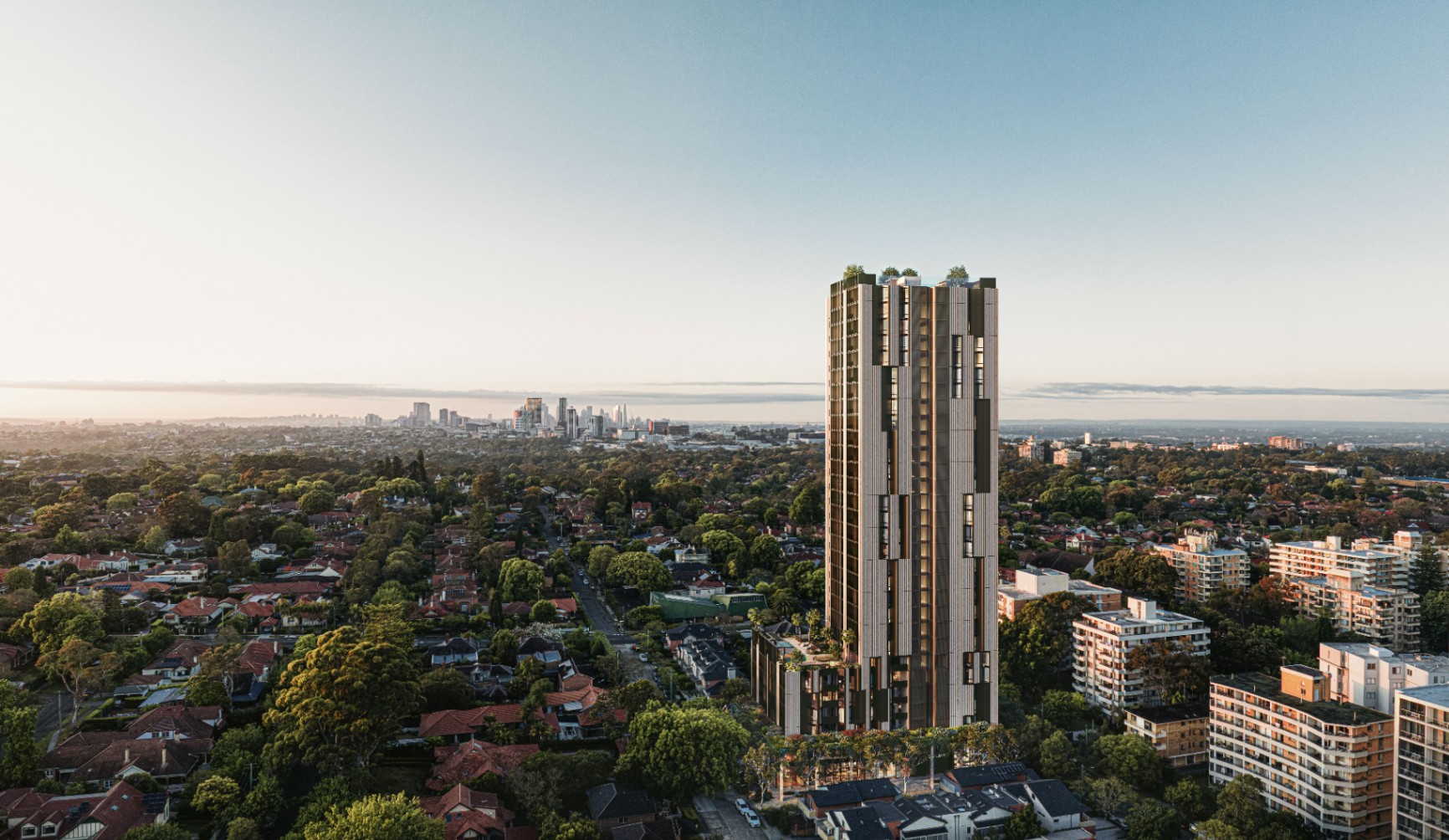 Coposit | Buy with $10K | Chatswood Real Estate Market | Buy Property in NSW
Celine | Chatswood NSW | $10K deposit | Secure with $10k and $658 x 152 weeks
When a negatively geared property is eventually sold at a profit, capital gains tax applies to the gain. For properties held for more than twelve months, the 50% capital gains tax discount reduces the taxable gain by half before it is added to income and taxed at the marginal rate.
This discount is a significant benefit for long-term property investors. An investor who makes a $300,000 capital gain on a property held for five years adds $150,000 to their taxable income in the year of sale, not $300,000. The effective tax rate on the gain, at a 37% marginal rate, is therefore 18.5 cents on the dollar of the total gain.
The interaction between negative gearing losses during the holding period and the capital gains calculation at sale is an area where an accountant's advice can meaningfully affect the investment outcome. Cost base calculations, the treatment of capital improvements, and the timing of a sale all have tax implications that are worth understanding before they become relevant.
 Coposit | Buy with $18K | Sydney Real Estate Market | Buy Property in NSW
Aeris | Melrose Park NSW | $18K deposit | Secure with $18k and $246 x 79 weeks
Negative gearing has been a feature of the Australian tax system for decades, but it is not immutable. It was briefly quarantined in 1985 before being reinstated in 1987. It has been a recurring subject of policy debate, with arguments on both sides about its effect on housing supply, housing affordability, and the equity of the tax system.
Investors who have built financial plans around the continuation of negative gearing should understand that it is a policy position rather than a permanent feature of the tax system. Its future depends on the political and policy environment at any given time, which is not predictable over the multi-decade holding periods that characterise property investment.
New investment properties bought through Coposit's platform are off-the-plan, brand new, and eligible for full depreciation schedules from settlement, which strengthens the tax position of a negatively geared investment relative to older established properties. Eligible buyers can secure one with $10,000 upfront and build the rest of the deposit through weekly instalments during construction. Browse investment-grade developments currently available, download the Coposit app, or contact the team to find out more.
Share this article



Follow Coposit:


© 2025 Copyright Coposit.

